
Rabby Extension Download and Token Approval Management: What DeFi Users Should Know
You are about to swap a token on a decentralized exchange. The wallet preview shows the transaction, the network fee looks acceptable, and the trade appears routine. Then a less obvious question arises: why is the application asking for permission to spend your tokens, and will that permission remain active after the trade? For US DeFi users, this is not a minor interface detail. It is a distinction between authorizing one transaction and granting a smart contract an ongoing allowance.
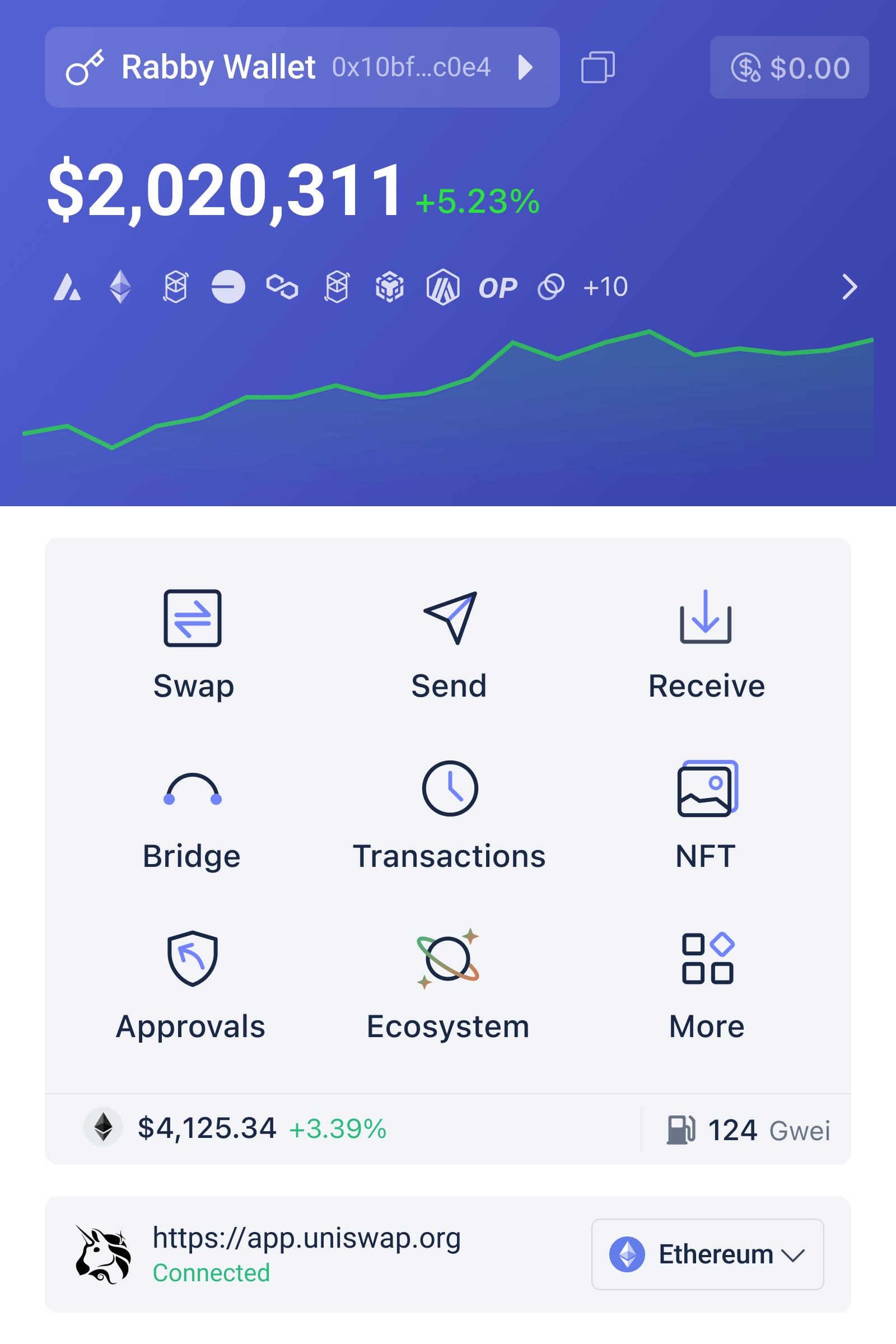
Rabby Wallet is designed to make that distinction easier to inspect before signing. Yet a wallet interface cannot eliminate smart-contract risk, and downloading a browser extension from an unsafe source can create a separate security problem before a user even reaches DeFi. The useful mental model is therefore not “Rabby makes transactions safe.” It is “Rabby can improve the quality of information presented at the decision point, while the user still controls the final authorization.”
Myth One: A Token Approval Is the Same as a Token Transfer
These are different on-chain actions. A token approval usually calls an ERC-20 token contract’s approval function and records that a designated spender—often a decentralized exchange or another DeFi contract—may move up to a specified amount of that token from the user’s address. The approval itself does not necessarily transfer tokens. It changes a permission table maintained by the token contract.
A later transaction can use that permission through a transfer-from mechanism. If the allowance is large, the spender may be able to move tokens within that limit without requesting a new approval each time. This is why an approval can outlive the original swap. The trade may be complete, but the permission may remain until it is reduced, replaced, or revoked.
That mechanism explains a common misconception: disconnecting a website, closing the browser, or removing a wallet extension does not normally cancel an on-chain allowance. The permission exists in contract state, not in the browser session. A wallet can help users identify approvals, but only a transaction to the relevant contract can change an already-recorded allowance.
Installing Rabby Without Turning the Download Into the Risk
The first security boundary is authenticity. Users should begin from a trusted project source or a carefully verified reference to the official browser extension, rather than relying on a search advertisement, an unsolicited message, or a look-alike site. For readers checking the installation path, this rabby extension download resource can serve as a starting point, but the decisive practice is to verify the publisher, domain, permissions, and store listing before installing.
After installation, create or import a wallet only through the extension’s normal flow. Never type a recovery phrase into a website, chat window, form, or support message. A recovery phrase is not an ordinary password: possession of it can allow control of the wallet. Hardware-wallet users should also confirm that the signing device and the browser extension are connected through the expected process, and that transaction approval still occurs on the intended device.
Rabby can improve transaction readability by presenting information about the likely effects of a proposed action. That is valuable because raw calldata is difficult for most users to interpret. Still, simulation and decoding are not omniscient. A contract can behave differently under changing state, depend on external calls, or contain logic that is difficult to summarize in a wallet window. A clear-looking preview is evidence to consider, not a guarantee that the application is trustworthy.
Myth Two: Approving the Maximum Amount Is Always More Convenient and Harmless
Many DeFi applications request a very large allowance, sometimes effectively an unlimited one, to avoid asking the user to approve every future interaction. The convenience is real: fewer approval transactions, lower friction, and potentially fewer network fees. The trade-off is also real: if the approved spender is compromised, malicious, upgraded in an unexpected way, or misunderstood by the user, a broad allowance can increase the amount exposed.
The right question is not whether unlimited approvals are universally wrong. It is whether the convenience justifies the additional permission in the particular context. A limited approval that covers the intended trade can reduce exposure, although it may require another approval later. An unlimited approval can be reasonable for a well-understood application used frequently, but it should be treated as a standing authorization rather than as a one-time checkout step.
There is a further complication. The visible name of an application is not the same thing as the contract address that receives approval. A familiar interface can route activity through several contracts, and an attacker can imitate the appearance of a known application. Users should examine the chain, contract interaction, token, amount, and spender details available in the wallet and application. When the expected action is a simple swap but the transaction requests an unrelated token transfer or permission, stopping is rational—not overly cautious.
How to Review and Reduce Token Permissions
A practical approval review begins with inventory. Identify which tokens have active allowances, which contract addresses are authorized to spend them, and whether those permissions are still needed. The most important distinctions are the token, the spender, the allowance amount, and the network. An approval on Ethereum does not automatically authorize the same spender on an entirely separate network, even though the user may view both through one wallet interface.
Revocation generally means sending a transaction that changes the allowance to zero or to a smaller value. This costs network resources and can fail or behave differently depending on the token contract’s implementation. Some tokens have unusual approval rules, including cases where changing a nonzero allowance may require first setting it to zero. Users should therefore read the wallet’s transaction preview and avoid assuming that every token follows the simplest ERC-20 pattern.
Revoking an approval also does not reverse a transfer that has already occurred. If a malicious or compromised spender has already used the allowance, lowering the remaining permission cannot retrieve the assets. This boundary is easy to miss: approval management is primarily preventive and containment-oriented. It reduces future authorization, but it is not a recovery mechanism for completed theft or an incorrect transaction.
For everyday use, a compact decision framework helps. First, verify that the application and network are the ones intended. Second, ask whether the requested permission matches the action. Third, prefer the smallest practical allowance when the application is unfamiliar, experimental, or used once. Fourth, review old approvals periodically, especially after interacting with protocols that are no longer maintained. Finally, separate a testing wallet from a wallet holding long-term funds when experimenting with new contracts.
Myth Three: A Wallet Warning Can Replace User Judgment
Warnings are most useful when they change behavior before signing. They may surface a suspicious contract, an unexpected asset movement, or a mismatch between the requested action and the user’s apparent intention. But warnings depend on available data, contract interpretation, and the quality of the underlying simulation. A new or obscure contract may not have enough history for a confident assessment, while a known contract can still be used incorrectly through a phishing interface.
This is a broader lesson about cryptocurrency wallets. The wallet is an interface to permissioned computation, not a bank employee who can guarantee the outcome. Its strongest contribution is contextual clarity: showing what may happen, identifying relevant risk signals, and making complex calls more legible. The final judgment still depends on the user’s ability to compare the request with the purpose of the transaction.
No recent project-specific news was supplied for the current reporting period, so the most durable takeaway is procedural rather than promotional. If wallet interfaces continue to improve their transaction simulations and approval views, users may be able to make more informed decisions with less manual contract inspection. That outcome would still depend on accurate decoding, transparent protocol design, and users who treat permissions as continuing rights rather than disposable pop-up prompts.
Frequently Asked Questions
Does installing Rabby automatically revoke my existing token approvals?
No. Token approvals are recorded on the blockchain by token contracts. Installing a new wallet interface does not alter those records. If you want to reduce or remove an allowance, you must initiate the appropriate on-chain approval-management transaction for the relevant token and spender.
Should I reject every request for an unlimited token approval?
Not necessarily. Unlimited approval can reduce repeated transactions, but it grants broader continuing permission. Consider the application’s reputation, the assets held in the wallet, how often the protocol will be used, and whether a limited allowance is practical. For unfamiliar or experimental contracts, a smaller allowance and a separate testing wallet can reduce potential exposure.
Can Rabby guarantee that a DeFi transaction is safe?
No wallet can guarantee that outcome. Rabby may provide useful previews and warnings, but simulations can have limits and smart contracts can behave according to changing on-chain conditions. Users should still verify the application, network, token, spender, amount, and intended result before signing.