
Rabby Wallet: Why Transaction Simulation Matters More Than Another Multi-Chain Feature
A wallet can support dozens of blockchains and still leave users guessing about what a signature will do. That is the counterintuitive problem at the centre of multi-chain DeFi: convenience expands faster than comprehension. Rabby Wallet approaches the problem from a different direction. Its most important feature is not simply the number of networks it supports, but the attempt to show the likely consequences of a transaction before the user approves it.
For users in Germany and across the wider European DeFi community, this distinction matters. Moving between Ethereum, Arbitrum, Base, Polygon or the BNB Chain is no longer technically unusual. What remains difficult is keeping track of approvals, bridge routes, gas assets, contract permissions and changing network contexts. Rabby is designed as a non-custodial, EVM-focused wallet for that environment. It can make complex activity easier to inspect, but it cannot remove the underlying risks of smart contracts or poor operational security.
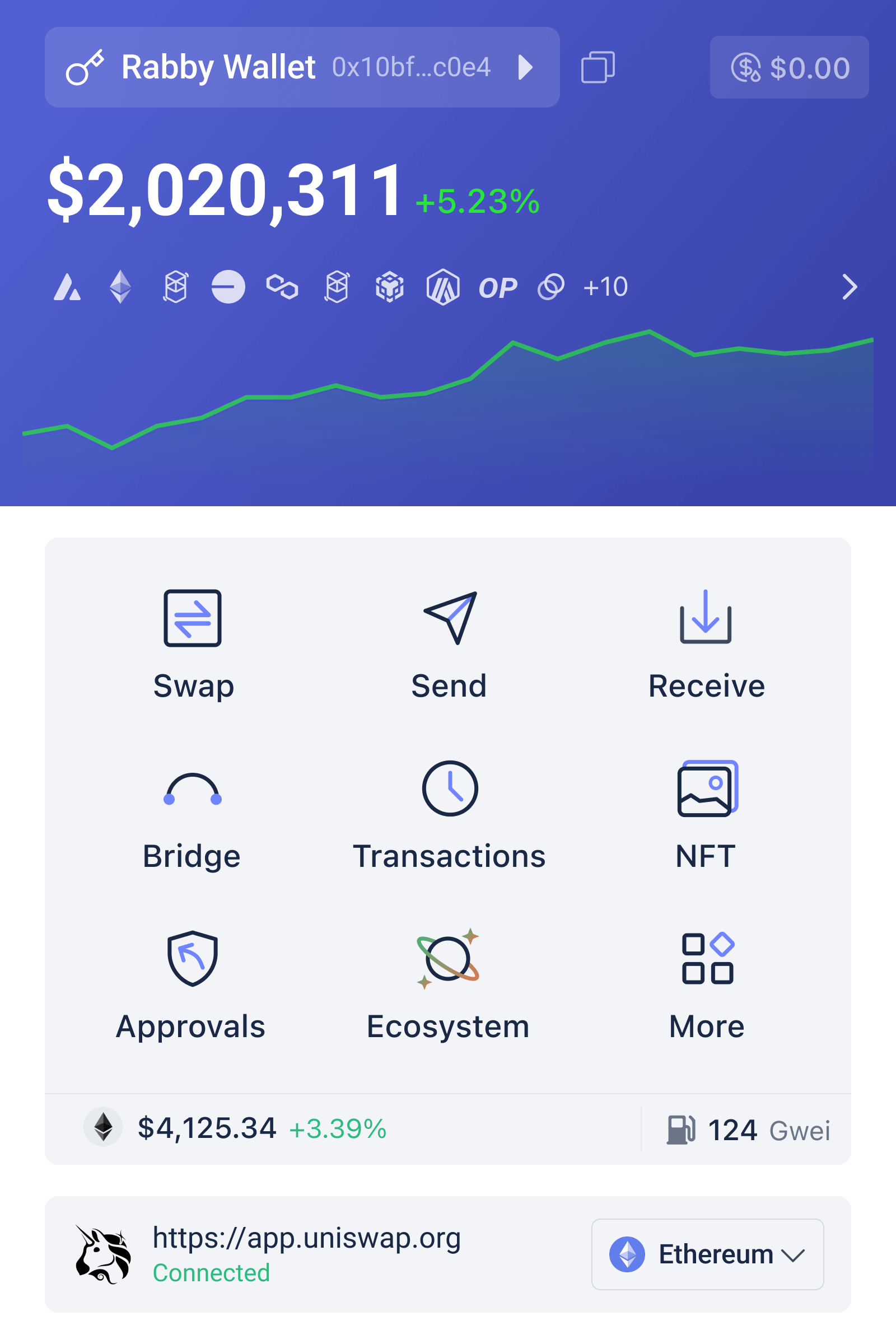
From signing messages to inspecting consequences
Many wallet users think of a transaction as a simple prompt: a decentralised application asks, the wallet displays a request, and the user confirms. That model is dangerously incomplete. A transaction may call a contract, approve token spending, exchange one asset for another, open a lending position or move funds through a bridge. The visible wording in a dApp often does not communicate the economic effect clearly.
Rabby’s transaction simulation is intended to close part of that gap. Before signing, the wallet simulates the proposed action and presents expected changes to token balances. In practical terms, the user can compare what is leaving the wallet with what should arrive, while also seeing warnings connected to the contract, address or permission being requested. This creates a more useful mental model: a signature is not merely an authorisation click; it is approval for a state change on a blockchain.
The distinction is subtle but important. Simulation is an interpretive and predictive layer built around the transaction. It does not rewrite the smart contract, guarantee that the protocol is solvent, or make an unsafe strategy safe. A simulation may also depend on the current state of the chain and the ability of supporting services to interpret the call. If the protocol behaves differently under unusual conditions, if a transaction is front-run, or if a contract contains logic that is difficult to model, the displayed result should be treated as a strong warning and orientation tool—not an insurance policy.
That limitation does not make the feature unimportant. It changes the quality of the user’s decision. A clear mismatch between the expected result and the user’s intention is often enough to stop a phishing transaction or an overly broad approval. The most valuable security control is sometimes not a complex detection engine, but a moment in which the user can ask: “Why is this contract taking this asset, and why is it asking for this permission?”
Why multi-chain convenience creates new failure modes
Rabby supports more than 140 EVM-compatible networks, including major ecosystems such as Ethereum, Polygon, Arbitrum, Optimism, Avalanche, Base and BNB Chain. Its automatic network switching can recognise the chain required by a connected dApp, reducing one of the most common sources of user friction. That is useful, especially for people who move between several applications during a single DeFi session.
Yet automation has a trade-off. Manual network selection is inconvenient, but it also forces the user to notice where an action is taking place. When a wallet switches automatically, the process becomes smoother while the chain context becomes easier to overlook. This is a broader lesson in interface design: removing friction can remove a useful checkpoint at the same time. Users should still verify the selected network, the token contract and the intended destination before signing, particularly when bridging or interacting with a new protocol.
Rabby integrates bridge routes through services such as LI.FI, allowing users to move assets across networks from within the wallet interface. It also offers an integrated swap function that can scan decentralised exchange routes, including liquidity sources associated with Uniswap and 1inch, with the aim of finding competitive prices and reducing slippage. These features turn the wallet into more than a key container. It becomes an execution and discovery layer for DeFi.
That consolidation is convenient, but it also concentrates decisions in one screen. A bridge transaction carries risks involving smart contracts, liquidity, route selection, finality and the possibility that the destination asset or network is not what the user expected. A swap aggregator may find a better quoted route, but the quoted price is not the same as guaranteed execution. Price movement, liquidity changes, gas costs and slippage settings still matter. The right question is therefore not whether Rabby “handles” the swap or bridge, but whether the user understands the route and the permissions being authorised.
Gas Accounts and the economics of abstraction
Gas is another source of avoidable complexity. Each EVM network generally requires its own native asset to pay transaction fees. A user may hold USDC on a chain and still be unable to move it because there is no native token available for gas. Rabby’s Gas Account feature is designed to address this problem by allowing fees to be paid across networks with stablecoins such as USDC, where supported.
This is a meaningful usability improvement because it separates the asset a user wants to transact with from the asset traditionally required to pay for computation. It may be particularly helpful for newcomers who understand stablecoins but do not want to maintain small balances of multiple native tokens. However, abstraction does not mean that fees disappear. The service still needs a mechanism to convert, advance or settle the required gas, and the user should inspect the applicable conditions, costs and supported networks.
The same principle applies to Rabby Points, which can be earned through activities such as swaps, gas top-ups or referrals. A loyalty programme may encourage engagement, but points should not be confused with yield, ownership or guaranteed future value. For disciplined users, the economic value of an action should be evaluated independently of any reward. Otherwise, a points system can turn an unnecessary transaction into a psychologically attractive one.
Security architecture: helpful boundaries, not magical protection
Rabby is a non-custodial wallet developed by DeBank for DeFi users. Private keys are stored locally on the user’s device rather than transmitted to Rabby’s servers. The software is open source and released under the MIT licence, while hardware-wallet compatibility includes devices such as Ledger, Trezor and OneKey. These design choices support a useful separation: Rabby can improve how a transaction is inspected, while the user retains responsibility for key custody and final signing.
For more information, visit rabby wallet.
The wallet’s security engine checks addresses and contracts for signals associated with phishing, known exploits and potentially dangerous approvals, including unlimited token allowances. This is valuable because token approvals are frequently misunderstood. An approval does not transfer tokens immediately; it grants a contract permission to spend up to a specified amount of a token. If that contract is compromised or malicious, an excessive allowance can increase the potential loss. Reviewing and limiting approvals is therefore a different task from merely checking the wallet balance.
Still, warning systems have boundaries. A new contract may not yet have a negative history. A legitimate protocol may contain complex interactions that are difficult to explain cleanly. A warning may be conservative, while the absence of a warning is not proof of safety. The strongest operational practice combines simulation, independent verification of the dApp’s domain, cautious approval limits and hardware-wallet signing for larger balances.
Rabby’s stated independence from its backend is also worth understanding precisely. The wallet does not itself decide or alter the user’s transaction; it acts as an interface and an independent checking layer around the signing process. Core signing functions can remain available even if Rabby services experience an outage, but some enhanced interpretation, data retrieval or convenience features may depend on external infrastructure. Resilience should be understood as a layered property, not an absolute promise that every feature works identically offline.
How to install and use Rabby responsibly
For someone searching for “Rabby installieren” or “rabby wallet herunterladen”, the safest starting point is source verification rather than speed. Use the official distribution channel for the browser, desktop or mobile platform, and check the publisher and application details before installation. A wallet extension has high privileges inside the browser, so a lookalike download or fake search advertisement can be more dangerous than a normal software mistake.
After installation, create or import a wallet only in a trusted environment. The recovery phrase should never be entered into a website, support chat or unsolicited form. For meaningful holdings, a hardware wallet can keep the signing key isolated while Rabby supplies the interface, simulations and risk context. A sensible workflow is to test with a small amount, confirm the network and destination, read the simulated balance changes, examine approvals, and only then sign a larger transaction.
A reusable decision rule is simple: treat every DeFi action as a four-part inspection. First, identify the chain. Second, identify the contract and permission. Third, compare the simulated asset changes with your intention. Fourth, consider what could happen if the protocol, route or recipient is wrong. This method remains useful even when the interface changes, because it focuses on mechanism rather than branding.
What to watch as wallets become execution layers
The recent positioning of Rabby in the Chrome Web Store as an open-source Ethereum and EVM wallet for DeFi users reflects a broader direction in the sector. Wallets are becoming execution layers that combine custody, routing, bridging, gas abstraction and risk interpretation. If that trend continues, the competitive question will be less about who lists the most networks and more about who communicates state changes most honestly.
The open question is whether users will become better informed or simply more dependent on automated interpretation. The answer will depend on interface transparency, the quality of simulations, the handling of edge cases and the user’s willingness to verify important actions independently. For German-speaking DeFi users, where cautious documentation and clear risk boundaries are often valued, that distinction is practical rather than theoretical.
Frequently asked questions
Is Rabby Wallet custodial?
No. Rabby is designed as a non-custodial wallet. Private keys remain under the user’s control and are stored locally on the device. That also means the user—not Rabby—must protect the recovery phrase and maintain secure backups.
Does transaction simulation guarantee that a DeFi transaction is safe?
No. Simulation shows expected effects and can reveal suspicious balance changes or permissions, but it cannot guarantee that a protocol is solvent, that market conditions will remain stable, or that every contract behaviour has been fully represented. It is a decision aid, not a guarantee.
Can Rabby replace a hardware wallet?
Rabby can provide a useful interface for hardware wallets, but it does not replace their key-isolation benefits. For larger balances, combining Rabby’s transaction review with a Ledger, Trezor or OneKey device can create a stronger separation between browsing and signing.
What should users check before downloading?
Verify the official source, publisher, platform and application details. Avoid links sent through unsolicited messages, and never share a recovery phrase with a website or support representative. A secure wallet begins with a trustworthy installation path.